In the Sri Vaishnava / Iyengar tradition, the birth of a child is followed by several beautiful rituals known as samskaras. These ceremonies welcome the baby into the family, invoke divine blessings, and guide the child through the early stages of life.
In earlier generations, elders in the family guided parents through these traditions. Today many young families live far away from elders, making it difficult to remember every ritual and its procedure.
This guide provides a simple timeline of the important ceremonies from birth until the child’s first year.
Baby Ritual Timeline
| Stage | Ritual | Typical Timing | Purpose |
| Before Birth | Seemantham | 7th or 9th month of pregnancy | Blessings for safe delivery |
| After Birth | Punyahavachanam | 10th or 11th day | Purification of home |
| After Birth | Naamkaran (Naming Ceremony) | 11th day or later | Officially giving the baby a name |
| After Birth | Joola Ceremony (Cradle Ceremony) | Usually same day as naming | Welcoming baby into family |
| Early Months | Ear Piercing | Around 3–6 months | Cultural and health tradition |
| Around 6 Months | Annaprasana | First feeding of solid food | Beginning of solid diet |
| Around 1 Year | Ayushya Homam | First birthday | Prayers for long life |
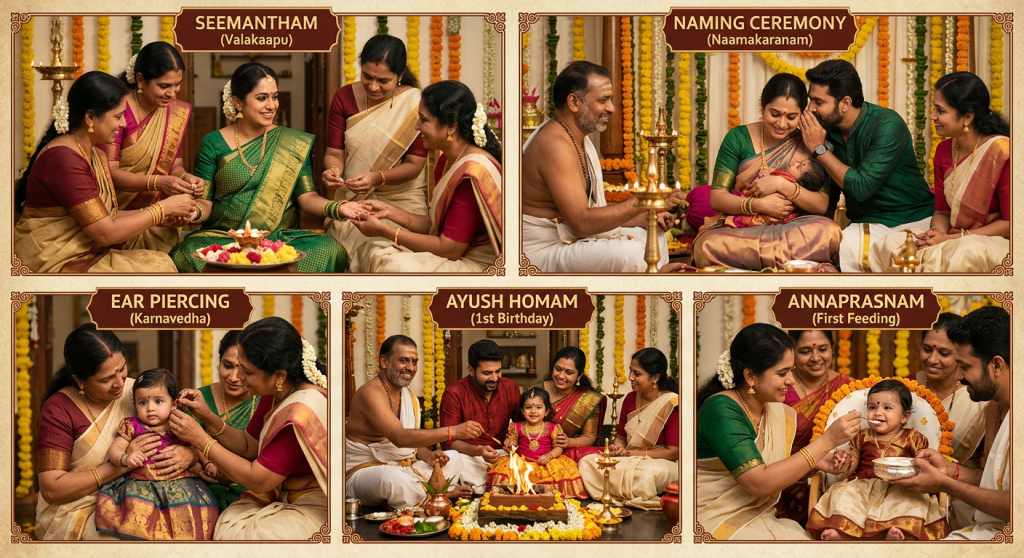
1. Seemantham (Before Birth)
Seemantham is performed during pregnancy, usually in the 7th or 9th month.
The ceremony seeks blessings for:
- Safe delivery
- Health of mother and child
- Protection from negative influences
In many Iyengar families, this is similar to a traditional baby shower, but with Vedic rituals.
2. Punyahavachanam (Purification Ritual)
After childbirth, a purification ritual called Punyahavachanam is performed.
This usually happens on the 10th or 11th day after birth.
The priest performs rituals to purify the home and prepare the family for the upcoming ceremonies such as naming.
3. Naamkaran (Naming Ceremony)
The Naamkaran ceremony officially gives the baby a name.
Traditionally:
- The priest performs puja
- The father whispers the baby’s name in the baby’s ear
- The name may be written on rice with a gold ring
Names are often chosen from:
- Names of Lord Vishnu
- Alwars
- Acharyas
- Sacred temples
This ceremony usually takes place on the 11th day after birth or on another auspicious day.
4. Joola Ceremony (Cradle Ceremony)
During this ceremony:
- The baby is placed in a decorated cradle
- Elder women sing traditional cradle songs
- Family members gently rock the cradle
The ceremony symbolizes welcoming the baby into the family and community.
Many families perform the cradle ceremony on the same day as the naming ceremony.
5. Ear Piercing Ceremony
Ear piercing is another traditional practice performed in early childhood.
It is usually done:
- Around 3 to 6 months
- Or sometimes during the first year
This tradition is believed to have both cultural and health significance.
6. Annaprasana (First Feeding of Solid Food)
Annaprasana marks the baby’s first intake of solid food, usually rice.
This ceremony is typically performed:
- Around 6 months of age
During the ritual:
- The priest performs puja
- The baby is fed a small portion of sweet rice or plain rice
This marks the beginning of the child’s transition from milk to solid foods.
7. Ayushya Homam (First Birthday Ritual)
When the baby turns one year old, many families perform Ayushya Homam.
This ritual includes:
- Vedic prayers
- Homam (fire ritual)
- Blessings for the child’s long life and health
It is often combined with the child’s first birthday celebration.
Importance of These Rituals
These ceremonies are not just social gatherings. They are meant to:
- Seek divine blessings for the child
- Protect the baby from negative influences
- Introduce the child to family and community traditions
- Preserve the sacred practices of the Sri Vaishnava lineage
Keeping Traditions Alive
Today many families live far from elders and traditional communities. However, these rituals can still be performed with simple arrangements.
Even small efforts to follow these traditions help preserve our spiritual and cultural heritage for future generations.
Final Thoughts
The early rituals in a child’s life represent love, protection, and blessings from the family and divine forces.
By understanding the meaning behind these ceremonies, younger generations can confidently continue the beautiful traditions of the Sri Vaishnava community.
 Site Title
Leave a comment