Joola Ceremony (Cradle Ceremony) in Sri Vaishnava / Iyengar Tradition – Complete Guide
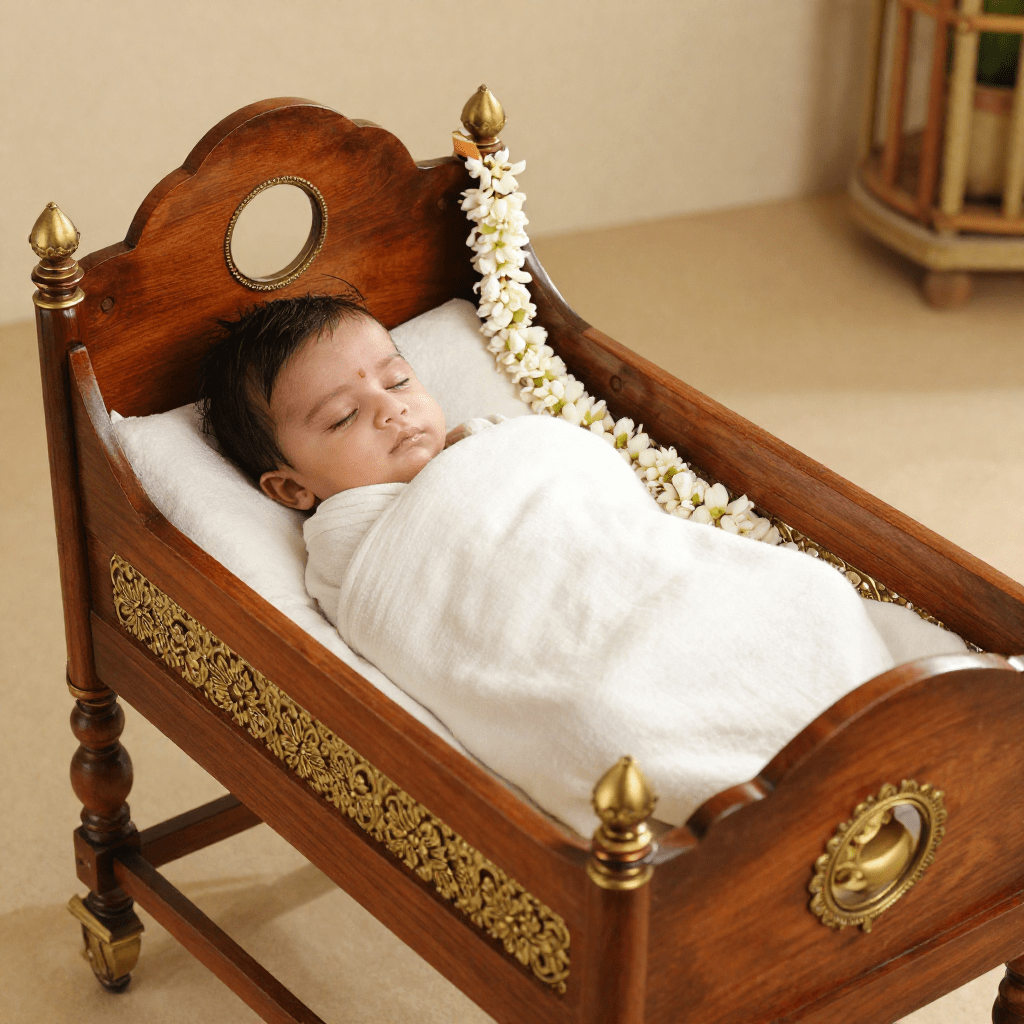
The Joola Ceremony (Cradle Ceremony) is a beautiful and emotional ritual performed for a newborn baby in many Sri Vaishnava / Iyengar families. In this ceremony, the baby is formally placed in a decorated cradle for the first time while family members sing traditional cradle songs and bless the child.
This ritual symbolizes welcoming the child into the family and community with love, protection, and divine blessings.
When Is the Joola Ceremony Performed?
The Joola ceremony is usually performed during the Naamkaran (Naming Ceremony) or soon after.
| Occasion | Typical Time |
| During Naamkaran | 11th day after birth |
| Alternative timing | 21st day or another auspicious day |
| Time | Muhurtham decided by priest |
In some families, the ceremony may be performed separately at home when relatives gather.
Spiritual Meaning of the Ceremony
The cradle represents protection, nurturing, and the start of life’s journey.
Placing the baby in the cradle symbolizes:
- The child being entrusted to the care of the family
- The beginning of the baby’s life in society
- Prayers for health, prosperity, and long life
The rocking of the cradle also represents the loving support of family members throughout the child’s life.
Items Required for the Joola Ceremony
Preparing these items beforehand ensures the ceremony runs smoothly.
| Item | Purpose |
| Cradle (Joola) | To place the baby |
| New cloth for cradle | Decoration |
| Flowers and garlands | Auspicious decoration |
| Turmeric and kumkum | Sacred symbols |
| Betel leaves and nuts | Traditional offering |
| Coconut | Sacred offering |
| Fruits | Offering and distribution |
| Rice | Used for blessings |
| Oil lamp (Deepam) | Auspicious beginning |
| New clothes for baby | Symbol of new start |
Some families also place small silver items or protective symbols near the cradle.
How the Joola Ceremony Is Performed
The ceremony usually takes place after the main puja or naming ritual.
Step 1 – Prepare the Cradle
- The cradle is decorated with flowers, cloth, and garlands
- Turmeric and kumkum may be applied to the cradle
- A lamp is lit nearby
Step 2 – Baby Is Brought to the Ceremony
The baby is dressed in new clothes and brought to the ceremony, usually by the mother or grandmother.
Step 3 – Baby Is Placed in the Cradle
- The baby is gently placed in the cradle
- Family members gather around the cradle
Step 4 – Cradle Songs Are Sung
Elder women traditionally sing cradle songs (Joola Paattu) while rocking the cradle.
These songs express love, blessings, and prayers for the baby’s future.
Step 5 – Family Members Rock the Cradle
Relatives take turns gently rocking the cradle while offering blessings to the baby.
Role of Family Members
Understanding family roles helps avoid misunderstandings.
Mother’s Side Usually Brings
- Cradle decorations
- Clothes for the baby
- Silver gifts
- Fruits and sweets
Father’s Side Usually Arranges
- Puja materials
- Priest arrangements
- Ceremony setup
- Food for guests
These traditions may vary between families but generally follow similar patterns.
Blessings From Elders
After the cradle ceremony:
- Elders bless the baby
- Turmeric rice may be gently sprinkled
- Gifts are given to the child
This is a moment where the baby receives the blessings of the entire family.
Cultural Importance of Joola Ceremony
The Joola ceremony reflects the deep family bonds in traditional Sri Vaishnava culture.
It highlights:
- Love and protection for the child
- Participation of extended family
- Celebration of new life
Even families living abroad can perform this ceremony at home with simple arrangements.
Tips for Modern Families Living Abroad
Many younger families today live far from elders. Here are some helpful suggestions:
- Decorate a simple cradle or baby bassinet
- Invite elders via video call
- Play traditional cradle songs
- Keep the ceremony simple but meaningful
The most important aspect is the love and blessings given to the child.
Final Thoughts
The Joola Ceremony is a joyful tradition celebrating the arrival of a newborn and symbolizing the beginning of the child’s journey in life.
By understanding the rituals, items required, and family roles, younger generations can confidently preserve these beautiful Sri Vaishnava traditions.
 Site Title
Leave a comment